
Welcome to Jumble, your go-to source for AI news updates. This week, we analyze the implications of the most restrictive and protective AI laws on the planet. Plus, we look at how to get more out of your favorite models with five professional workflows. Let’s dive in ⬇️
In today’s newsletter:
🔒 Strict Chinese chatbot regulations
⚙️ Professional large language model workflows
💼 Copilot adds intelligence features
🚙 Tesla Optimus robot debut
🎨 Weekly Challenge: Visualize ideas with Google Mixboard
📜 China Unveils Comprehensive AI Regulations
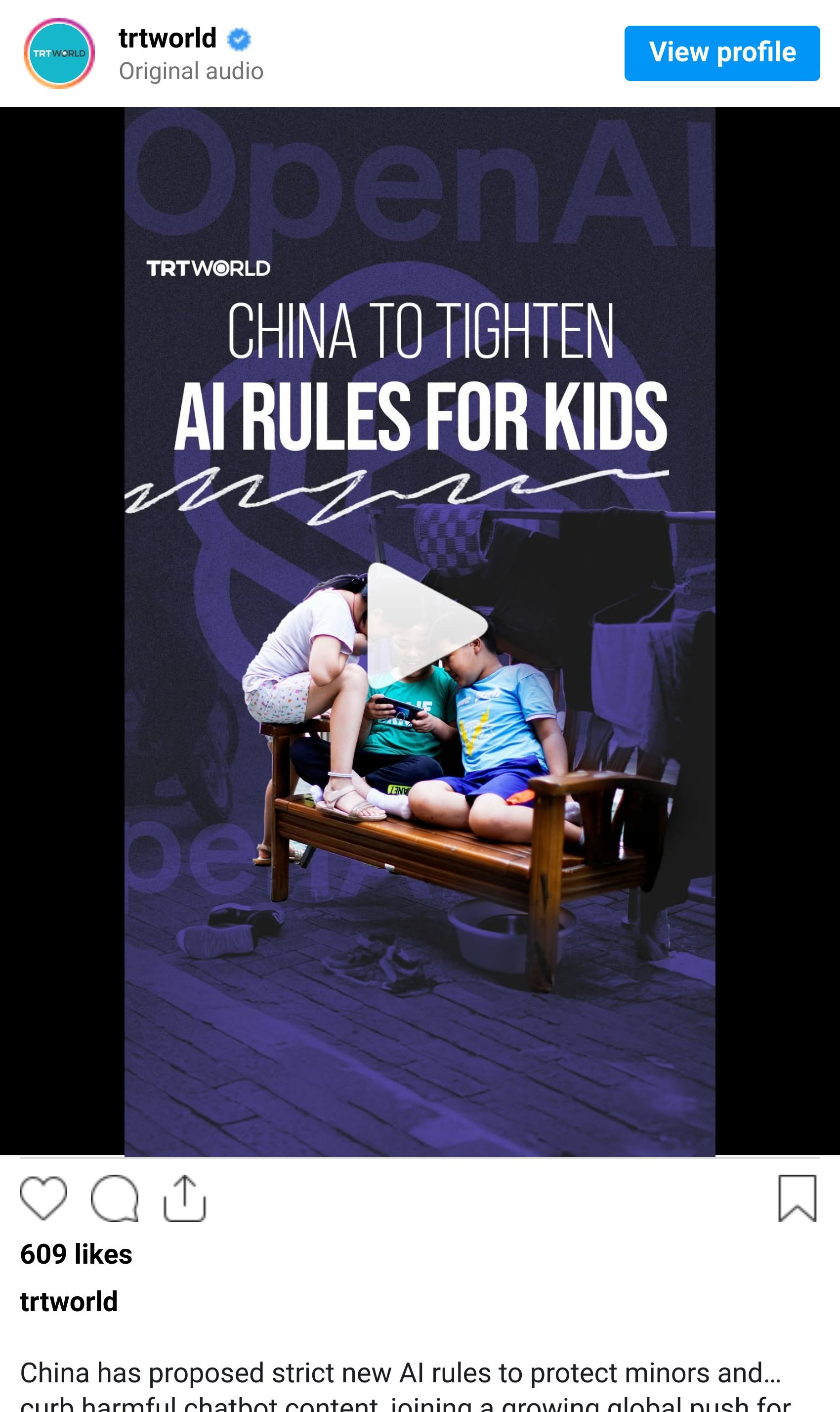
China’s significant amendments to the Cybersecurity Law officially took effect on January 1, 2026. Contrary to earlier reports of a 2025 rollout, this update represents the first major overhaul since 2017. While the framework promises state support for infrastructure, it establishes a permission-first ecosystem that places a heavy burden on developers, effectively favoring stability and control over unbridled market speed.
⚖️ The High Cost of Compliance
The amendments introduce a punishing three-tier penalty structure, with corporate fines reaching 10 million RMB (~$1.4M USD) and personal liability for executives up to 1 million RMB. Crucially, the law imposes strict liability for AI outputs, meaning developers are legally responsible for errors or harmful content generated by their models.
This creates a massive regulatory moat that benefits well-funded incumbents like Baidu and Tencent while potentially suffocating smaller startups that cannot afford the legal infrastructure to guarantee compliance.
📉 Operational Constraints on Companion Apps
New draft rules for anthropomorphic services target the booming AI companion market with severe operational restrictions. Apps must now enforce mandatory breaks after two hours of continuous use and implement anti-addiction protocols.
While intended to protect mental health, industry analysts warn this could destroy user retention metrics and revenue models for consumer AI apps. Furthermore, the requirement to monitor users for emotional dependency poses significant technical challenges and privacy concerns regarding surveillance of intimate conversations.

🌍 Risk of Global Isolation
The updated framework broadens regulatory reach to include foreign organizations, asserting extraterritorial jurisdiction over any entity damaging national network security. Combined with strict data localization and cross-border transfer restrictions, this creates a siloed ecosystem.
International firms may find the Chinese market increasingly inaccessible, leading to a decoupling where Chinese AI develops in a distinct, isolated trajectory separate from global open-source advancements.
🏛️ The Great Decoupling
The philosophical divide is now stark. The US "ship fast and fix later" model prioritizes rapid iteration and market dominance, accepting higher public risk. China’s approve first model demands ex-ante safety proof, often delaying product launches by 3-6 months for security assessments.
While this offers greater state-level predictability and safety, it risks a "regulatory lag" where Chinese companies are perpetually slower to deploy cutting-edge features than their Western counterparts.
🤖 5 LLM Capabilities You’re Underutilizing

Advanced models like Gemini, ChatGPT, and Claude are capable of much more than simple text generation or basic information retrieval. By understanding the underlying logic of these systems, you can automate complex tasks and improve the quality of your professional output. Here are five ways to utilize these tools that go beyond the standard prompt and answer format.
🏗️ Structured Data Extraction and Cleaning
One of the most powerful features is structured data extraction. You can provide an LLM with massive amounts of disorganized text and instruct it to generate a clean markdown table or JSON file. This is perfect for turning a chaotic list of meeting notes into a structured project plan or harmonizing messy address lists.
🎭 Strategic Scenarios and Persona Simulation
You can use these models for strategic scenario testing. By asking the AI to simulate a specific persona, such as a skeptical customer or a technical auditor, you can pressure test your business ideas or code before presenting them to a human audience. This allows you to identify weak points in your logic early.
⚙️ Reverse Prompting for Better Instructions
Another underutilized trick is reverse prompting, where you ask the model to generate the ideal prompt for a specific goal. This allows the AI to tell you exactly what information it needs to produce the best result, ensuring you are aligned with the model's internal logic.

🎨 Cross Domain Style Translation
You can leverage LLMs for cross-domain technical translation, such as explaining complex legal concepts in the style of a software engineer. This helps in communicating ideas to different departments effectively, bridging the gap between specialized jargon and general understanding.
🧠 Iterative Socratic Problem Solving
Finally, leverage iterative socratic exploration by telling the model not to give you an answer, but to ask you a series of leading questions to help you arrive at a solution yourself. This turns the AI into a powerful tool for deep cognitive inquiry and critical thinking rather than just a search engine.
Weekly Scoop 🍦
🎯 Weekly Challenge: Using Google Mixboard to Power Your Visualizations
Challenge: This week we are creating with Mixboard, a new AI-powered design canvas in Google Labs. It uses the Nano Banana model to help you visualize complex ideas on an infinite whiteboard.
Here’s what to do:
1️⃣ Start a new project 🎨 by typing a creative prompt like "retro futuristic kitchen" to generate an initial mood board.
2️⃣ Remix your visuals 🖼️ by selecting any image and using the "more like this" button to iterate on specific styles.
3️⃣ Edit with natural language 💬 by typing instructions such as "change the lighting to sunset" to modify images instantly.
4️⃣ Generate context text 📝 based on your visual layout to automatically write descriptions or captions for your board.
Give it a try to plan your next room makeover or presentation. It bridges the gap between text prompting and visual design.
From the latest developments in AI regulation to cool tricks you can do with modern LLMs, AI will continue to dominate the headlines in 2026. See you next time! 🚀
Stay informed, stay curious, and stay ahead with Jumble!
Zoe from Jumble
