
Welcome to Jumble, your go-to source for AI news updates. This week, Manus launches a desktop app that gives its AI agent direct access to your local files and hardware. Then, we look at why Grammarly is facing a class action lawsuit from authors for its controversial expert review feature. Let’s dive in ⬇️
In today’s newsletter:
🖥️ Manus launches a local desktop AI agent
✍️ Authors sue Grammarly for unauthorized AI impersonation
🧠 OpenAI pivots toward enterprise productivity tools
🏎️ NVIDIA unveils a CPU built for agents
📊 Weekly Challenge: Supercharge your Google Sheets
💻 Manus Brings AI Agents to Your Desktop
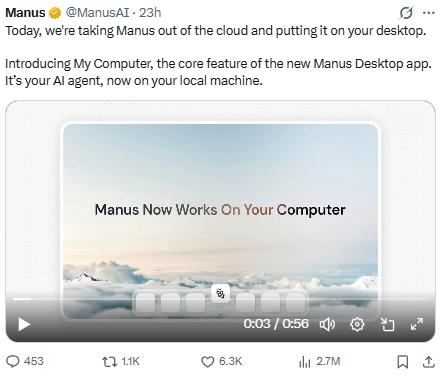
Manus released My Computer, a desktop application allowing its AI agent to step outside the browser. Users on macOS and Windows can now let an AI interact directly with local files and hardware; representing a foundational shift from agents that live in the cloud, to ones that live on your computer 24/7.
Would you trust an AI agent with full access to your local files?
🛠️ Direct Hardware Access and Local Workflows
This update bridges cloud sandboxes and local environments. The agent can perform tasks like organizing thousands of photos or building apps. It can leverage local GPUs for machine learning, joining competitors like Perplexity and NVIDIA in the race for on-machine tools.
🛡️ Security Controls for Local Execution
The Manus Desktop app requires explicit user approval for every command. It can automate tedious and repetitive work. However, unlike OpenClaw, users must click "Allow" to maintain control.
While claims of app building are impressive, benchmarks are still pending. Either way, the trend of turning a PC into a 24/7 AI powered workstation marks a major shift in personal computing.
📝 Grammarly Faces Backlash for Expert Impersonation
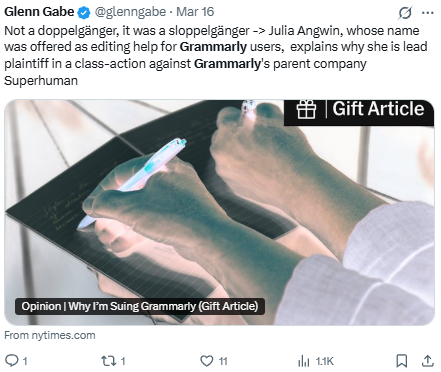
Grammarly, once known for preventing plagiarism, is now facing a federal class action lawsuit for allegedly doing exactly that. The controversy centers on an Expert Review feature mimicking famous authors without consent. Writers like Julia Angwin accuse the firm of violating right of publicity laws by scraping their work to create AI agents.
🎭 Reputation Risks and Creator Livelihoods
The tool allowed users to receive advice in the style of figures like Stephen King or Carl Sagan. Authors argue this threatens their professional reputations and devalues expertise. Grammarly suspended the feature after the CEO admitted the agent misrepresented influential voices in ways that concerned experts.
⚖️ Legal Precedents for AI Training
This dispute adds to the growing litigation surrounding how AI models use copyrighted work for commercial gain. While Grammarly claims the feature helped users discover perspectives, critics suggest it was a calculated attempt to automate livelihoods using scraped data. The outcome could redefine fair use for AI tools simulating human style.
Weekly Scoop 🍦
🎯 Weekly Challenge: Maximize Gemini in Google Sheets
Challenge: Use the new Gemini integration to automate the boring parts of data entry in Google Sheets. You don't need to be a data scientist to make this work.
Here's how to try it:
🗂️ Step 1: Open a new sheet Start by listing a few locations or businesses you want to research in the first column.
✨ Step 2: Activate the side panel Open the Ask Gemini panel and look for the "Help me create" or "Fill with Gemini" options to start the intelligence engine.
💬 Step 3: Prompt for data Ask the AI to fill in specific details like addresses, ratings, or prices for your list using natural language.
🎬 Step 4: Watch the magic Check out this short demo video if you need a visual guide on how to prompt the AI effectively to build your first intelligent spreadsheet.
Will AI agents soon live directly on our computers instead of the cloud? And as companies race to automate work, who really owns the data, styles, and identities powering these systems? See you next time! 🚀
Stay informed, stay curious, and stay ahead with Jumble!
Zoe from Jumble
